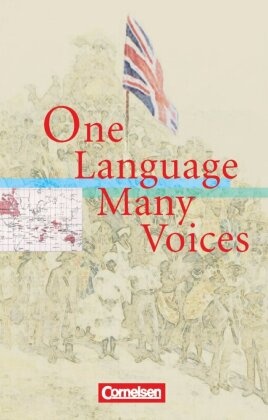
The responsibility of the British Empire towards its former colonies is nowadays a very difficult and controversial topic.
But to understand this complex conflict between the British Empire and the colonized people, you have to “go back into the past” and have a look at the period between the 17th and the 20th century. It was the time of Colonialism. During this time, many people thought that the superior and enlightened Europeans were different from other races they conquered. Some people, like the Africans, were not only regarded as less intelligent, but also as not really human. This imperial mindset resulted in many British people believing in their absolute superiority over the non-whites.

Furthermore, the African people were considered as inept and incapable of building civilization and therefore it was the “burden of the white man”, his “sense of mission”, to come to the colonies and to civilize those “dark and barbaric tribes” by giving them the gifts of freedom, justice and humanity. This can be explained by the simple reason that the British people considered themselves as the “perfect race” who were in complete control of both themselves and the new technologies (Industrial Revolution). “Of course”, the colonists did all these things selflessly and without any desire to make money or to benefit from them. They just wanted to bring progress and humanize the colonies because it was their “duty”. And in return for all this hard work they felt they had the right to take the land away from the natives and use it for themselves.

However this colonial mindset was just a fake. In reality, from the beginning on they had the desire to conquer all of Africa and oppress other peoples. Instead of bringing freedom and justice they brought atrocities and agonies. They exploited and extracted as much as they could from the colonies and destroyed a whole continent. A good example is the Triangular Trade. This trade was a standard practice during this time and took place between the British Isles, the colonized West coast of Africa and the Caribbean. In the first passage, from Great Britain to Africa, trading goods like beads,clothes and weapons were sent in order to civilize the natives. Afterwards, the Africans were sent to America where they were traded like animals and used as slaves. That's the reason why almost 50% of the Africans died during the trip. And lastly, goods like cotton,rum and tobacco which were produced by the slaves were transported back to the British Isles. Because of this

cruel and brutal trade 50 million Africans were stolen from their home country and separated from their family.
So, as you can clearly see, the British Empire owes the former colonies very much. They are also one of the reasons why the former colonies are so disadvantaged and undevelopped nowadays. 400 years of oppression, atrocities and exploitation cannot be just forgotten or excused. Fortunately, lots of colonies declared their independence during the 20th century. They resisted the cruel regimes and started to live in a real freedom and real justice. Of course, there are still many dictatorial regimes in the former colonies which aren't much better than the British Empire. But you have to take into account that many of those dictators are still supported by the former colonists in order to profit from resources like gold or diamonds.
But on the other hand, you also have to mention the positive aspects of Great Britain. After the end of the Colonialism, the time of decolonization started. They even let some of the countries get independent without any resistance. Additionally, they founded a free and independent organisation, called Commonwealth of Nations. This is a kind of organisation which consists of Great Britain and some of the former colonies. Although, the Queen is the Head of State of all these former colonies, they are all regarded as free and equal states. None of these colonies is oppressed or disadvantaged anymore. They are all sovereign states but economic differences still prévail.
But this was just a small step of a very long journey. The former colonizers still have to do many things to make up for the atrocities they committed about 400 years. Many of the former colonies still need much support from outside in order to become financially stable and fully independent. And that's what the British Empire is responsible for. They harmed the former colonies so heavily that consequently they have to pay for it. Maybe then, the destroyed colonies get what they really deserve: freedom and justice.

Taking everything into account, it can be said that the colonizers made two big mistakes. Firstly, they oppressed and destroyed the colonies instead of bringing freedom or justice. And secondly, above all, it is just inacceptable to conquer or to colonize another country if it doesn't want to be conquered. Of course, it is right that the people in the colonies were primitive and undevelopped in  technological standards compared to Europe. But if they want to live like that and want to be “native” you have to let them. It's their right and their will to live how they want to live.

by Mesel

Letter to Mavis


Dear Mavis,
I hope you’re fine and you had a good time since we last met. I ‘m sorry that I haven’t written you a letter in such a long time… But please let me try to explain the reason for this, because I’m feeling terrible at this moment and I would  really need you, my best friend, next to me.
 First of all you know that I went to Malaysia with Guy. Do you remember him? You  met him once while he was in England. I thought he’s the man I‘ll spend my whole life with, but when we were in Malaysia something happened, or, actually, I learnt of something that had already happened.
But I want to start at the beginning of the story: After living in Malaysia for quite a few months, I really started to love this place, the nature, the atmosphere, my husband. We were so happy and this just made me feel more and more sure that he’s the one I would get old with.
The problems started with a young native women who lived in the village next to our house. She has three children and I just had the feeling she’s following us all day. And one day, the worst day in my whole life, Guy told me something I would never have imageined… After I asked Guy some questions about her he suddenly told me that the three children of the Malaysian women were also his children and that before he came to Britain she  had been something like his wife. As you can imagine, I was totally shocked.
I didn’t know how to handle this. Who would have thought of something like that?  I mean she even used to  live in this house. Yes, Guy tried to explain the situation to me. He even asked me if I wanted to live somewhere else with him, but I was to totally unable to have a clear thought for weeks. So I stayed with him, in this disgusting house for a few more months. But  now I've come to the conclusion that I cannot live with him anymore; I have to leave him…
But, now I feel even worse. Regarding the time I had with Guy, I have to admit that we really had an amazing time together and if you start a relationship with somebody you can’t expect that he never had another partner. On the other hand I can't forgive him for not having told me that he already has three children who would live quite close to us before we left for Malaysia. I had a long time to think about this situation and there’s one issue that makes me the villain in this story, the story of my life: I’m not sure if I want to leave him, because of his lie, or because of the fact that his last relationship was with a native woman. I can’t explain why I feel like this, but I somehow also have the feeling that this is the true reason for me to leave him.
Does this make me a bad, racist person? Or is it just normal to feel superior as an English woman in a colony of Britain?
If I am just overreacting right now I could ruin my whole life. Maybe everything could still work out fine   if I just could forgot about his past. However, I will probably never know... I can't stay.
Mavis, I’m also writing you to tell you that I’ll return to Britain. I know it must be confusing for you to read this letter, but I’m glad I still have someone to write to and I hope you understand that even if I’m not sure whether this is a mistake or not, I came to a decision: I will leave Guy, this city, Malaysia. I will return to Britain.
When reading the letter you might think this is definitely a mistake regarding my feelings to him, but even if there are still feelings towards my husband, there is this one disgusting and undescribable emotion that makes me want to cry every single day I’m at this place or even in this country. I don’t know if this is the right decision and neither you nor anybody else can probably tell me. However, now that I've made up my mind, I feel stronger than I've felt in weeks. 
Therefore I would like to ask you to help me into a new life in Britain. I really need a good friend like you when I return. Overall, I hope you can understand me and how I feel. I had a great time here in Malaysia and I wish you could see this beautiful nature in all it’s wonderful colors, but all this doesn’t mean anything if I have no one to share it with. Even worse, if you kind of lost the person to share it with.
You are my best friend, and I very much understand if you can’t understand my decision. Please be assured that if ever you need help I will still be there for you.  I’ll always do my best to help you. I'll let you know soon when exactly I’ll return to Britain. I really hope to see you then.
Thank you for everything you have done for me so far. 
Best wishes,
Doris

by Frank

My son the fanatic

Read this article from the New York Times: The Jihadist Next Door


It's a fascinating account of a young Syrian-American who grew up in small town Alabama, very assimilated, very much part of the popular crowd. He is now a major figure in an Al-Quaida subsidiary called 'Shabab' in Somalia. It felt to me ads if this true story picks up where 'My son the fanatic' left off.
It is a long article, so you need patience. Make sure that you at least study the interactive timeline that is part of the article!
Also, the comments New York Times' readers made about this article are very interesting to read! Read a few and write your own! (Please e-mail me a copy of your comment!)

Watch this comment on the movie 'My son the fanatic". Does it make you want to watch the movie? Why? Again, comment and send me a copy!


Qaisra Shahraz: A pair of jeans

Hello comrades!

I just wanted to remind you to read the second ending to the short story "A pair of jeans" !
It is very important to understand Miriam's character and the cultural context!

See you on Wednesday ;-)

Highly Recommended Book: "If The Buddha Got Stuck" by Charlotte Kasl


I am currently reading a very good book called "If The Buddha Got Stuck" by Charlotte Kasl. It is a very interesting book, easy to read and it will speak to "anyone who's ever experienced being stuck in life".

Regarding our examination schedule and recognizing everyone complaining about too much work and stressful times, I thought of recommending a book to you that might open your mind to think about yourself, your life and throw a more esay-going and objective glance at your goals and everything you have already achieved in life.

I hope that at least anyone does read this at all, but I would be very happy if someone would comment or even ask me, I would love to share my book with you (although once read it, you most likely want to have your own copy)
It has about 220 pages but is very thin and perfect for reading one chapter during your ride to school or during some free minutes. You don't have to read it in one rus, you can read it step by step.

Here is an excerpt from the book:

"The purpose of life is to be alive. Not to gather objects, achieve, accumulate successes, or forge your body to fit a mold. It’s simply to be alive. To touch, feel, sense, hear, see and live in a dynamic flow of whatever arises in the moment; to accept the wild and crazy thoughts that go through your mind, your animal nature, your wisdom, the fears that arise and grip your chest, the laughter that brings tears, and the joy that takes you beyond yourself. To be alive is to meet and accept every part of yourself - the scuzzy, sweet, passionate, talented, or slow. From this place of self-acceptance you can be a good friend to yourself and others.
This does not preclude achieving, learning, or taking good care of yourself, but you do so because your body, mind, and energy converge to do whatever feels in harmony with the aliveness that you are.
From this point of self-acceptance our consciousness spills over into the vast expanse of human experience and we start to see the connections between all sentinent life, between our brothers and sisters everywhere. Said another way, we start to experience love.
This book is about the journey from being stuck to unstuck; from feeling trapped to being free; from compromising our values to living at one with our integrity; from being immersed in thoughts from the past to living in the present. It's a process and a journey that sometimes starts with a dull ache and other times with acute pain. It's sometimes motivated by survival needs and other times by the thought, "There's got to be more than this." Some people are visited by grace with a mind-opening experience that leads them to realize there is a whole different way to live, and becoming more open at ease becomes a touchstone for life."

If the Buddha got Stuck at bücher.de

short stories

Here are some links for those of you who are interested in reading some short stories:

http://www.americanliterature.com/sstitleindex.html
http://www.classicreader.com/
http://www.classicshorts.com/index.shtml

Hey,
I just found a really great video about a BBC debate about immigration and racism.
And it is with a member of the BNP (a right wing party).
Really a great video!
http://www.youtube.com/watch?v=4iKfrY9l2kY&feature=related (it's just the first part, the other ones will appear on the side)

Copyright © 2008 - Hölderlin Englisch 12 - is proudly powered by Blogger
Blogger Template