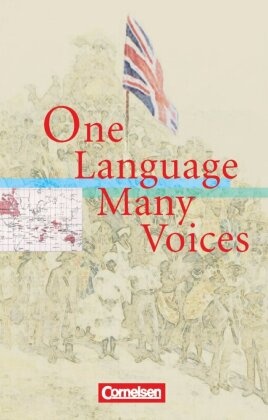
What is the responsibility of Great Britain towards its former colonies in the British Empire?
postet by Captain Cook Labels: British EmpireFurthermore, the African people were considered as inept and incapable of building civilization and therefore it was the “burden of the white man”, his “sense of mission”, to come to the colonies and to civilize those “dark and barbaric tribes” by giving them the gifts of freedom, justice and humanity. This can be explained by the simple reason that the British people considered themselves as the “perfect race” who were in complete control of both themselves and the new technologies (Industrial Revolution). “Of course”, the colonists did all these things selflessly and without any desire to make money or to benefit from them. They just wanted to bring progress and humanize the colonies because it was their “duty”. And in return for all this hard work they felt they had the right to take the land away from the natives and use it for themselves.
Read this article from the New York Times: The Jihadist Next Door
Hello comrades!
I just wanted to remind you to read the second ending to the short story "A pair of jeans" !
It is very important to understand Miriam's character and the cultural context!
See you on Wednesday ;-)
I am currently reading a very good book called "If The Buddha Got Stuck" by Charlotte Kasl. It is a very interesting book, easy to read and it will speak to "anyone who's ever experienced being stuck in life".
Regarding our examination schedule and recognizing everyone complaining about too much work and stressful times, I thought of recommending a book to you that might open your mind to think about yourself, your life and throw a more esay-going and objective glance at your goals and everything you have already achieved in life.
I hope that at least anyone does read this at all, but I would be very happy if someone would comment or even ask me, I would love to share my book with you (although once read it, you most likely want to have your own copy)
It has about 220 pages but is very thin and perfect for reading one chapter during your ride to school or during some free minutes. You don't have to read it in one rus, you can read it step by step.
Here is an excerpt from the book:
"The purpose of life is to be alive. Not to gather objects, achieve, accumulate successes, or forge your body to fit a mold. It’s simply to be alive. To touch, feel, sense, hear, see and live in a dynamic flow of whatever arises in the moment; to accept the wild and crazy thoughts that go through your mind, your animal nature, your wisdom, the fears that arise and grip your chest, the laughter that brings tears, and the joy that takes you beyond yourself. To be alive is to meet and accept every part of yourself - the scuzzy, sweet, passionate, talented, or slow. From this place of self-acceptance you can be a good friend to yourself and others.
This does not preclude achieving, learning, or taking good care of yourself, but you do so because your body, mind, and energy converge to do whatever feels in harmony with the aliveness that you are.
From this point of self-acceptance our consciousness spills over into the vast expanse of human experience and we start to see the connections between all sentinent life, between our brothers and sisters everywhere. Said another way, we start to experience love.
This book is about the journey from being stuck to unstuck; from feeling trapped to being free; from compromising our values to living at one with our integrity; from being immersed in thoughts from the past to living in the present. It's a process and a journey that sometimes starts with a dull ache and other times with acute pain. It's sometimes motivated by survival needs and other times by the thought, "There's got to be more than this." Some people are visited by grace with a mind-opening experience that leads them to realize there is a whole different way to live, and becoming more open at ease becomes a touchstone for life."
If the Buddha got Stuck at bücher.de

Here are some links for those of you who are interested in reading some short stories:
http://www.americanliterature.com/sstitleindex.html
http://www.classicreader.com/
http://www.classicshorts.com/index.shtml
Hey,
I just found a really great video about a BBC debate about immigration and racism.
And it is with a member of the BNP (a right wing party).
Really a great video!
http://www.youtube.com/watch?v=4iKfrY9l2kY&feature=related (it's just the first part, the other ones will appear on the side)
The Education supplement of the New York Times features the college life. You'd beentering your Freshman year if you were in the States. Maybe you find something of interste to you, all the articles and pictures are by college students!
Enjoy your holidays!
This video shows a section of an interview with Doris Lessing in 2007 on the occassion of the Nobel Prize she won:
I always find it interesting to get to know more about the authors of the stories I read, so I searched for some information about the writers of the short stories in order to share it with you. I found some websites which I put into the pictures on the right hand side. So you just have to click on it to get to the belonging website.
There is also a website where you can read thousands of short stories online, including the ones in "One Language Many Voices". You can search the author by name and get a listing of all his/her writings.
Online Literature Network
Feel free to comment or post other links that might be interesting! ;-)
I must say that I have never before experienced perfectly respectable and peacful neighbours become wild and aggressive.
The cruel shooting of an elephant
postet by Anonym Labels: Essay questions Orwell, George Orwell: Shooting An ElephantWe were very helpless, so Eric Blair must do our work for us. So he killed the elephant with his old rifle.
In this moment, he didn't know, that he will kill an innocent elephant. He didn't feel very confident in the crowd of natives because he hate his work out of pety for the natives. He feels guilty to be a part of the British imperialism and he see the burmese people as a further threat against him becouse for him they are untruthful and cowardly.
But i can't understand why he had killed the elephant? He didn't think about what he had done. He was also very helpless like the natives. He is not qualified for this job here, because he made the thinks worser than before.
We don't need the british in our country.
British official killed innocent animal
postet by Anonym Labels: Essay questions Orwell, George Orwell: Shooting An ElephantIt was a shocking scene yesterday, Eric Blair, a british official, killed an elephant with many shoots out of a german rifle. The elephant died a long painfully death, because the britain did not shoot really precisly. His shoots were scattered in the body of the elephant.
The british official was called to kill the elephant by rumors, apparently the elephant had gone on a rampage in the town and had destructed some buildings. But after nobody could find these destructions of the buildings. It was only a build of lies.
In an interview Eric Blair said that he was shocked as he heard he killed an innocent elephant. When he was called for help, he took his rifle and ran to the location of the elephant. He explained that he received wrong information and is awfully sorry about this incedent. The owner of the elephant guessed that somebody gave Eric Blair the wrong information with purpose. The British administration is not favoured in this country. This incedent depictes the goverment of the Britain worse organized and critizised it.
The action of Eric Blair is also very dubious, why he killed the elephant so cruel and fast?
He did not answere on this question. My opinion is that the british were on the wrong place. They destructed our country and exploit our important trades of our agriculture.
The British Empire has to dissappear. It is the only solution to escape of our poverty.
The elephant was killed by a British sub-divisional officer
postet by Anonym Labels: Essay questions Orwell, George Orwell: Shooting An ElephantThe elephant which made a lot of trouble in our town was killed yesterday. Killed by the British sub-divisional officer Eric Blair. Our people were really helpless against the big male elephant which destroyed bamboos huts, killed a cow, raided some fruit-stalls an killed an Indian man.
Eric Blair was called to solve the issue. He came with his rifle, an old 44. Winchester and searched for the animal. The white man with his rifle who came to do something against the ''beast'' was the spectacle of the year for the Burmese population. Soon a big crowd was formed which followed Eric Blair and grew continously. It was clear that Eric Blair didn't feel very confident in his position with all the Natives in the back who would never leave him. The sub-divisional officer often turned around and looked really desperate to the crowd. Undoubtedly he tried to look not frightened and overstrained in front of the Natives. It seemed that he didn't want to kill the elephant but in the end he shot again and again at the big animal which finally died after half an hour of agony. Interestingly Eric Blair was not man enough to stay during the elephant died. This underlines again the poor personality of him and the European people generally.
It's a question of being superior or not
postet by Tara Labels: Essay questions Orwell, George Orwell: Shooting An Elephant"As for the job I was doing, I hated it more bitterly than I can perhaps make clear. In a job like that you see the dirty work of the Empire at close quarters."
To begin with, Burma, the country where our story “shooting an elephant” by George Orwell takes place, was British territory.
The young police officer, the narrator, is positioned in Burma where he has to watch over the population.
Furthermore he is feeling two different types of hatred. That is, the dislike towards the citizens of Burma for being rude and impolite and their disrespectful attitude towards the foreigner white men in their country "...and none of them seemed to have anything to do except stand on street corners and jeer at Europeans"(p.70 l.6f). Especially the young Buddhist priests, who are waiting for an opportunity to humiliate them. The other hatred is for the British Empire, which he sharply criticizes. He notices the suffering and pain the citizens carry the whole time with them. As representative of the Empire and the white colonizers, he feels guilty for the bad treatment with whom they oppress their “ slaves”. Because of that he already considers to quit his job. But on the other hand the Empire brings progress to the country. In fact he does not really know anything as a result of his ill-educated life “I did not even know that the British Empire is dying, still less did I know that is a great deal better than the younger empire …”(p.70 l.22f).
Besides the challenge for an Empire like the British was, is to order and calm people after riots.
Additionally it has to guarantee safety for its people, like the administration which has to deal with a huge amount of people. The young officer was also alone with the yellow- faced crowed.
The pressure to kill the elephant let the crowd push him forward. He has to make a decision whether he kills the animal or he gains a loss of authority
In conclusion you can tell that both officers and colonized are superior and inferior in a certain way.
The British Empire has such a power over the involved parties, that any freedom in general and freedom of opinion isn’t possible.
The tragic death of an elephant
postet by Anonym Labels: Essay questions Orwell, George Orwell: Shooting An Elephant"Yesterday was one of these days I never thougt it would exist. It was an exiting day, a shocking day but also very enlighting. While I write these lines my things are already packed and I just wait for dawn to arrive to leave this godforsaken place to go back to England, my home country. Why do I leave? This is a good question... Maybe because I don't belong to this strange country, but I think this is only an excuse to escape from what happened yesterday and which still shakes my bones. I never was so afraid in my whole life.
Yesterday an elephant was shot. This sounds very pale but it isn't. The day before yesterday I had a little chat with Eric Blair. He is the sub-divisional police officer but most of the time I think he is a very strange person. He detests the British Empire but he works for it. He feels a great sympathy for the natives although they really hate him. Sometimes he is so frustrated of their behaviour, he looks close to tears when you talk with him about these subjects. But sometimes, when I look at this forelorn man I get the feeling that he is not only lonely and frustrated but also very brave. Since yesterday I know it is true.
Yesterday an elephant raved town. He had already destroyed a bamboo hut and killed a native when I arrived nearly at the same time as Blair. When he saw the corpse his face became white and ashy but I'm not sure if it was because of the smashed body or because of the burden, which laid on his shoulders. Maybe it was both of it. He sent me away to get a bigger riffle to kill the wild beast. His own was to small, maybe because he hadn't realised until then how dangerous the situation really was. I hurried to get the riffle and when I was back a crowd followed us to find the animal. Blair didn't look very well, you could see that the situation made him feel uncomfortable. We both knew that the crowd only wanted to see something exiting happen and of course they wanted to get some meat but what can we do? We are only strangers in this odd country and we cannot change the people, anyway how hard we try. When we finally found the elephant he was already calm again. It didn't look dangerous in any way and I still have doubts if it was really necessary to kill it. It didn't look wild nor angry but peaceful. I leered at Blair and I think he had the same doubts as me but there still was the crowd. And then, after he came up to the elephant, he aimed and shot. He missed the elephant's brain so it didn't die at the spot. First it only altered, then it collapsed but so slow that you could see the agony of his death. It was horrible to watch but it was even more horrible when I realised that the elephant understood that it was dying. My body still shakes when I think of it. Blair shot several times but it didn't want to die. And the crowd was waiting to get their meat. I couldn't watch it anymore, it was to cruel and after Blair left there was nothing more to see. He looked so desperate. Was it because he didn't want to do it? I'm not sure but I'm sure he felt the way I did.
Yesterday I realised there is nothing we can do in this country. Who are we to rule this country, these strange people? They don't want us, we are only puppets; the Empire uses us and the natives use us and I don't want to bear this anymore. So I decided to leave and never come back. This is the best thing you can do. After all, I never want to get in such a situation as Blair was yesterday. I think I wouldn't have stand it if it was me. Blair really is a breave man and he gave me the reality check I needed."
Imperialism, an evil thing
postet by Julia Labels: Essay questions Orwell, George Orwell: Shooting An ElephantThe present quote is an extract of the story “Shooting an Elephant” by George Orwell (Eric Blair), who tells us of his own feelings and experiences as a British official in Burma, that was part of the British Empire in these times.
The occurrence in the story is a problem with an actually tamed elephant that has been out of control, but has already calmed down, when Eric Blair, the officer, arrives. That’s why he really does not want to shoot him. However, he feels forced to do it by the “two thousand wills” (p.74) of the native crowd behind him. So despite of being the superior white, he submits to those wills and shoots the elephant.
But the aim and the deeper sense of this story are to criticize colonialism and the British’s demeanor towards the natives by emphasizing the bad effect it has on the colonized people but also on the colonizers, that is to say the British, themselves.
The statement of the author: "As for the job I was doing, I hated it more bitterly than I can perhaps make clear. In a job like that you see the dirty work of the Empire at close quarters.” shows his personal deprecatory attitude towards the Empire’s actions. The “dirty work” is the suppression, exploitation and the very bad treatment of the native population. As a police officer he can see the bad living conditions of the natives and especially the fear and misery of the prisoners (“the wretched prisoners”, “cowed faces” (p.70)). And because of being a representative of this system, the British Raj, he really feels guilty and even commiserates with the native people, on the one hand.
But on the other hand, these people are just one more reason for hating his job. In their eyes he is the enemy, viz. the British intruder and superior oppressor. That’s why they don’t miss any opportunity to ridicule and humiliate him: “As a police officer I was an obvious target and was baited whenever it seemed safe to do so.” (p. 69).
Undoubtedly, imperialism is an “evil thing” (p.70) for Blair, but of course he cannot express his criticism publically.
In conclusion I would like to say, that it must have been very hard for people, who felt the way, Eric Blair did, since they must have had the feeling of being all alone. Being not proud of the Empire, they could neither identify themselves with it, nor were they allowed to cooperate with the natives. And finally, they still had to preserve the mask of the superior white oppressors, even if in reality they felt, as if they were ruled by the natives.
Puppeteer or puppet?
postet by Anonym Labels: Essay questions Orwell, George Orwell: Shooting An Elephant"As for the job I was doing, I hated it more bitterly than I can perhaps make clear. In a job like that you see the dirty work of the Empire at close quarters." (p. 70, l. 13-15)
This quote is one of the key lines of the short story `Shooting an Elephant `from Georg Orwell, as it shows the feeling of the narrator and main character towards his job and The British Empire, for which he is working.
This main character is Eric Blair, a sub- divisional police officer in Moulmein Lower Burma in the times of the Raj. He suffers from the `anti-European feeling` (p. 69 l. 4) which was very present at those times in Lower Burma and is, as a representative of the British Empire, the target of hate and rejection of the Burmese population (As a police officer I was an obvious target and was bailed whenever it seemed save to do so` p. 69 l, 7-8).
In addition of being rejected and teased by the native population Eric has another reason to hate his job: he questions the ideology of the British Empire and does not believe in imperialism (´For that time I had already made up my mind that imperialism was an evil thing and the sooner I chucked up my job and got out the better´ p. 70 l. 9-10 ).
In his heart he secretly wants the Burmese to be free from their British oppressors and is now stuck between his `hatred of the empire and `his ´rage against the evil spirited beasts who tried to make ` his ´job impossible` ( p.70 l. 24-26).
The young Buddhist priests for example seem, to exist only to jeer at Europeans (´The young Buddhist priests were the worst of all` p. 70, l.5 ).
But as the main character is `young and ill-educated`( p 70, l.19) and it is his job to represent the British he does his job as `the people expected it `of him.
Still in his heart he has a “sense of guilt” (p.70, l. 19) concerning the “dirty work of the Empire”. He sees the “wretched prisoners huddling in the stinking cages “and after a while has to admit that his work in Moulmein is to do what the natives want an expect him to.
“My whole life, every white man’s life in the east, was a struggle not to be laughed at” (p. 75,l. 42-43). This quote shows the hardships of his job.
No one can blame Eric Blair for hating his Job in which he sees himself being an „absurd puppet pushed to and fro by the will of those yellow faces”( p. 74, l. 30).
Blair shot an elephant
postet by Laura S Labels: Essay questions Orwell, George Orwell: Shooting An ElephantToday something unbelievable happened: The young British official Eric Blair shot an elephant! The people are still in uproar. When the elephant went must and escaped from its owner it caused a huge chaos: It devastated the bazaar, killed a cow, damaged almost everything that got into its way and even killed a man! The elephant’s mahout left in order to run after it but he took the wrong direction and was too far away to restrain the elephant when it was found again.
So Eric Blair had to attend to the elephant before it could go on causeing devastation. He found the elephant standing calmly in a paddy field and peacefully eating. There was a huge crowed of people standing behind the British police man, they knew that he had to shoot the elephant and the wanted some excitement.
But Blair didn’t shoot immediately - he hesitated. Why didn’t he just shoot? The elephant wasn’t out of reach, he couldn’t have missed it even if he was a very bad shooter. Didn’t he want to shoot? Did he felt sorry for an animal? Well, an elephant really is an majestic and pretty valuable animal, but it killed a human! It had to be killed and Blair had to do it! He just like the other British came to Burma to oppress us and make profit! He calls himself a police man, he was the only man with a weapon, he was the only one who could protect the people. At least, that’s what he owes us!
Finally he load his gun and shot at the elephant. He had to shoot three times to make the elephant fall. But the elephant didn’t die, yet Blair fired his remaining shots. He wasn’t dead when Blair went away, I don’t know if he just got tiered or if he didn’t want to see the elephant dying.
How could people like him conquer Burma?